
The Igbo-Ukwu archaeological finds — bronze objects of extraordinary sophistication dated to the 9th century CE — and what they prove about the depth and complexity of Igbo civilisation before European contact.
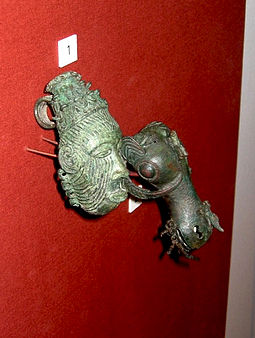
The Discovery
In 1938, a man named Isaiah Anozie was digging a cistern in his compound in Igbo-Ukwu village, Anambra State, when he struck bronze objects of unusual quality. He notified the colonial authorities; the objects were collected and stored. It was not until 1959–1960 that the British archaeologist Thurstan Shaw — working with the permission and collaboration of the Igbo-Ukwu community — conducted the first systematic excavation of the site. A second excavation followed in 1964. What Shaw found transformed the understanding of precolonial West African history.
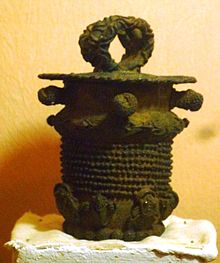
The excavations revealed three distinct deposits. The first was a burial chamber containing the remains of a man of high status surrounded by regalia — bronze objects, copper ornaments, ivory, and the remains of approximately five other individuals who appeared to have been buried with him. The second was a storehouse containing ritual objects: vessels, altar stands, and ceremonial items of great intricacy. The third was a pit containing over 700 objects, including bronze items, pottery, beads, and copper wire.
What the Bronzes Show
The Igbo-Ukwu bronzes are significant for several reasons that go beyond their aesthetic quality. Radiocarbon dating placed them in approximately the 9th century CE — making them older than the famous Benin bronzes by several centuries, and demonstrating that high metallurgical achievement in the Niger region predates both Benin and any European contact. The glass beads found at the site originated in Egypt or India — indicating that Igbo-Ukwu in the 9th century was connected, through intermediate trading networks, to the trans-Saharan and Indian Ocean trading worlds.
What the Bronzes Prove
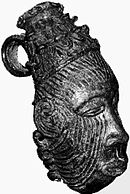
The colonial representation of sub-Saharan Africa before European contact was of a region without history, without civilisation, and without the capacity for sophisticated cultural production. The Igbo-Ukwu finds demolished this representation for the specific case of Igboland. A society that could produce these objects in the 9th century was not a society without history. It was a society whose history had simply not been written in forms that European colonialism recognised as legitimate.
Adiele Afigbo, the most important Igbo historian of the colonial period, made this point directly: the Igbo-Ukwu finds did not prove that the Igbo were "civilised" by European standards — a framing that accepts colonialism's own criteria — but rather that the Igbo had developed forms of cultural achievement, social organisation, and artistic excellence fully comparable to those of any other society on earth at the same period.
The Igbo-Ukwu Objects Today
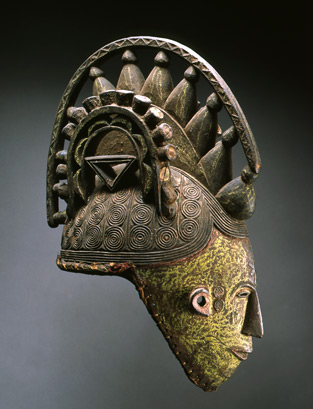
The Igbo-Ukwu objects are held primarily in the National Museum in Lagos and the National Commission for Museums and Monuments in Abuja. Thurstan Shaw's publication of the finds — Igbo-Ukwu: An Account of Archaeological Discoveries in Eastern Nigeria (2 vols., 1970) — remains the authoritative archaeological account. The full cultural implications of the finds continue to be worked out in ongoing archaeological and historical research.