How Igbo is written — the history of Igbo literacy from Nsibidi ideographs to the Önwu orthography to the contemporary digital age.
Three Writing Traditions
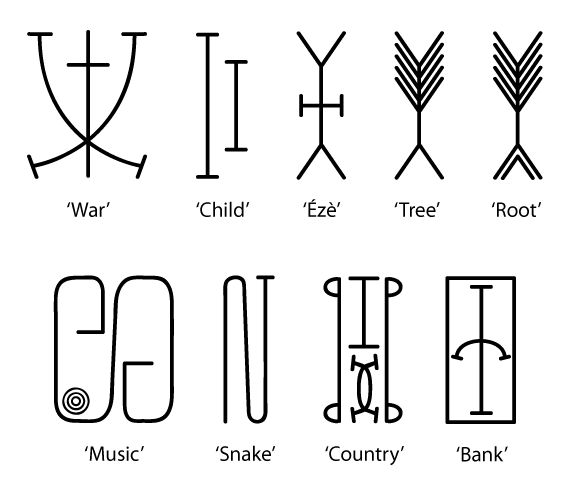
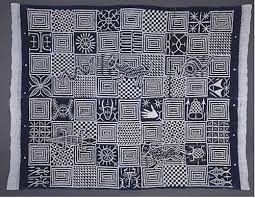
Igbo has been written in three distinct traditions. The first is Nsibidi — a system of ideographic symbols developed by the Ekpe secret society of the Cross River area, used across southeastern Nigeria and western Cameroon for centuries before European contact. Nsibidi is not an alphabet; it is a system of ideographs — symbols that represent ideas, relationships, and situations rather than sounds. It was used for communication between Ekpe society members, for decoration of ceremonial objects and cloth, and for public announcements. It is one of the indigenous writing systems of Africa and predates any European influence in the region.
The second tradition is the Roman-script Igbo developed by Christian missionaries in the 19th century, standardised by the Önwu Committee in 1961 into the current standard orthography. This is the Igbo of school textbooks, newspapers, government documents, and the written literary tradition.
The third is the Ndebe script — a contemporary indigenous script for Igbo developed by Lotanna Igwe-Odunze, which attempts to create a visual form for Igbo that better captures the tonal and phonetic character of the spoken language than the Roman alphabet can.
The Önwu Orthography
The Önwu orthography — established by the Society for Promoting Igbo Language and Culture (SPILC) under the leadership of F.C. Ogbalu in 1961 — is the current standard written form of Igbo. It uses the Roman alphabet with eight vowel letters (a, e, i, ị, o, ọ, u, ụ) and marks high and low tone with acute and grave accents respectively. The eight vowels reflect the Igbo vowel harmony system: the set I vowels (i, ị, u, ụ) and the set II vowels (e, a, o, ọ) do not normally mix within a single word.
The orthography has been criticised for its limitations: it does not adequately represent prenasalised consonants common in some dialects, does not systematically mark downstep tone, and its vowel letters (particularly ị and ụ) are not available on standard keyboards — a significant practical barrier to Igbo digital literacy. These limitations are the subject of the ongoing orthographic reform debates documented in the Phoneme Inventory page.
The Literary Tradition
Written Igbo literature begins with missionary translations — the Igbo New Testament (1900), the complete Igbo Bible (1913) — and continues through the Onitsha market literature of the 1950s–1970s, the work of Igbo-language novelists and poets, and the contemporary digital writing in Igbo that social media and dedicated language platforms are fostering. The literary tradition in Igbo is younger than the literary tradition in English by most Igbo writers (Achebe, Okigbo, Adichie all wrote primarily in English) — but it is growing, and it is the foundation on which Igbo language survival in the 21st century depends.