Eight full biographical portraits — the figures whose lives illuminate the full arc of Igbo history from the slave trade era to the present.
Odumegwu Ojukwu (1933–2011)
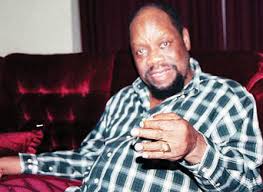
Chukwuemeka Odumegwu Ojukwu is the most contested figure in modern Igbo history. The son of one of Nigeria's wealthiest men, educated at Epsom College and Lincoln College Oxford, he became Military Governor of Eastern Nigeria after the July 1966 counter-coup and the leader who declared Biafran independence on 30 May 1967. His decision — taken after the failure of the Aburi Accord and in the context of mass killings of Igbo in the north — was supported by the overwhelming majority of the Igbo population. He led the Biafran war effort for two and a half years against overwhelming odds, fled to Côte d'Ivoire in January 1970, was pardoned in 1982, returned to Nigeria, and spent the remainder of his life advocating for Igbo interests within the federal system. He died in London in 2011 and was buried with full military honours in Nnewi.
Olaudah Equiano (c.1745–1797)
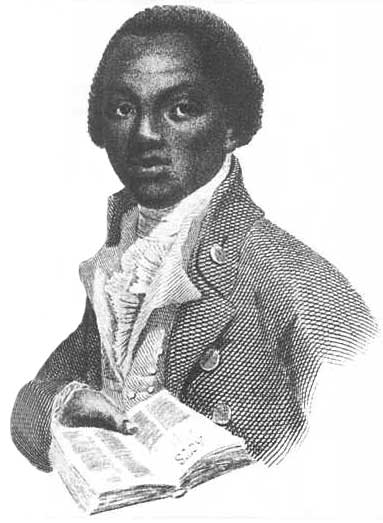
Olaudah Equiano is the most significant Igbo voice in the historical record before the 20th century. Born in what is now Anambra State, kidnapped and enslaved as a child, transported across the Atlantic, sold multiple times, and eventually purchasing his own freedom, Equiano settled in Britain and became one of the leading voices of the 18th-century abolitionist movement. His autobiography — The Interesting Narrative of the Life of Olaudah Equiano (1789) — is simultaneously the founding document of Igbo diaspora literature, the most important Black abolitionist text of its era, and an invaluable source on 18th-century Igbo life. He married a British woman, testified before Parliament, and organised with the Sons of Africa. He died in London in 1797.
Nnamdi Azikiwe (1904–1996)
Nnamdi Azikiwe — "Zik of Africa" — was the towering figure of Nigerian nationalism and the most significant Igbo political figure of the 20th century's first half. Educated in the United States, he returned to West Africa as a journalist and politician, founding the West African Pilot newspaper in 1937, the NCNC political party, and eventually becoming the first President of Nigeria (1963–1966). His pan-African vision connected the Igbo national experience to the broader African and diaspora struggle for dignity and self-determination.
Chinua Achebe (1930–2013)
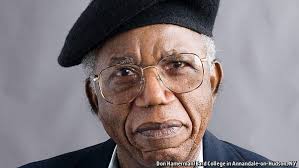
Chinua Achebe is the most significant Igbo cultural figure of the 20th century and, by most measures, the most significant African writer of any century. Born in Ogidi, Anambra State, his novel Things Fall Apart (1958) — which sold over 20 million copies in 57 languages — made the precolonial Igbo world fully visible to a global audience in all its complexity, beauty, and tragedy. His subsequent novels documented the colonial encounter and its aftermath with equal rigour. His memoir There Was a Country (2012) gave the definitive Igbo literary account of the Biafra War and reignited debate about its moral accounting.
Flora Nwapa (1931–1993)
Flora Nwapa was the first African woman to be published by a major international publisher — Heinemann's African Writers Series published Efuru in 1966 — and the first African woman to establish her own publishing house (Tana Press, 1977). Born in Oguta, Rivers State, she drew on the women's oral traditions of the Igbo lakeshore communities to create fiction that centred Igbo women's interior lives in ways that had never before appeared in African literature. She is underacknowledged relative to her significance.
Chimamanda Ngozi Adichie (b.1977)
Chimamanda Ngozi Adichie is the most globally significant Igbo writer of the 21st century. Born in Enugu and raised in Nsukka in the house previously occupied by Chinua Achebe, her novels — Purple Hibiscus (2003), Half of a Yellow Sun (2006), Americanah (2013) — have been translated into over 30 languages. Her TED talks — "The Danger of a Single Story" and "We Should All Be Feminists" — have reached hundreds of millions of viewers worldwide.
Christopher Okigbo (1930–1967)
Christopher Okigbo is the greatest Igbo poet of the 20th century. His four major sequences — Heavensgate, Limits, Silences, and Path of Thunder — redefined African poetry in English. Educated at Government College Umuahia and University College Ibadan, he worked as a librarian at the University of Nigeria Nsukka. He volunteered for the Biafran army in 1967 and was killed in action near Nsukka in August 1967, aged thirty-six. His collected sequences, published posthumously as Labyrinths (1971), remain among the finest poetry written in English in the 20th century.
Margaret Ekpo (1914–2006)
Margaret Ekpo was one of the most significant women in Nigerian nationalist and political history. Born in Itu, Cross River State, she organised women's political associations in Aba and Calabar during the nationalist movement of the 1940s and 1950s, led women's campaigns against colonial taxation, and was elected to the Eastern House of Assembly in 1954 — one of the first women elected to a Nigerian legislative body. She continued advocating for women's political participation throughout her long life. She represents the tradition of Igbo and southeastern Nigerian women's political action that the Women's War of 1929 inaugurated.