
Igbo tradition — the living framework of values, practices, ceremonies, and obligations that structures community life and maintains the relationship between the living, the ancestors, and the divine.

What Tradition Means in Igbo Life
The Igbo word most often translated as "tradition" is omenala or omenani — literally "what is done in the land," or more precisely "what is done in this place by these people." The phrase encodes a philosophy: tradition is not an abstract universal but a specific, place-rooted practice; it is not merely what was done in the past but what is done now by a community that considers itself continuous with its ancestors; and it is not static but responsive — what is done in the land changes as the land and its people change, while maintaining a thread of continuity that the community recognises as its own.
The Core Institutions
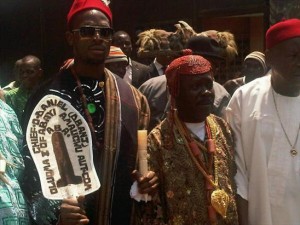
Igbo traditional life is structured around several interlocking institutions. The village assembly (oha) — in which all adult men participate and decisions are made by consensus — is the primary unit of political governance. The age-grade system (otu ogbo) organises community members into cohorts that move through specific social roles and responsibilities as they age. The title society (ozo, nze, and their variants) provides the framework through which social authority and prestige are earned through demonstrated achievement. The ụmụada — the daughters of the lineage — exercise specific judicial and ritual authority in both their natal and marital communities.
These institutions interlock: the village assembly makes decisions; the age grades implement them; the titled men provide authority and adjudication; the women's institutions manage specific domains of community life. The system as a whole is more sophisticated than the European political theory that dismissed it as "stateless" could comprehend.
Ofo na Ogu: The Moral Foundation
The deepest principle of Igbo tradition is ofo na ogu — the principle that authority derives from moral integrity. The ofo staff — a piece of wood from the detarium tree, the physical embodiment of ancestral authority — must be held by a person who maintains ogu (righteousness) for that authority to be real. An elder who has lost moral standing has lost his ofo. This principle — that power is conditional on moral conduct — is the most radical feature of Igbo political philosophy and the deepest continuity in Igbo tradition across all its variations.