
Biafra: Causes, Course, and Consequences — the thirty-month war that killed between one and two million people and whose unresolved legacy shapes Igbo political life to this day.
The Road to Independence
The Nigeria-Biafra War did not begin in May 1967. It began in January 1966 when the first military coup killed the Northern Premier Ahmadu Bello, the Federal Prime Minister Tafawa Balewa, and the Western Premier Akintola — but spared the Eastern leaders. The coup was led primarily by Igbo officers and was perceived in the north as an Igbo bid for power. The counter-coup of July 1966 killed many Igbo officers and brought Yakubu Gowon to power. Between September and October 1966, organised massacres of Igbo in northern Nigeria killed between 30,000 and 100,000 people. Approximately 1.3 million Igbo fled south.
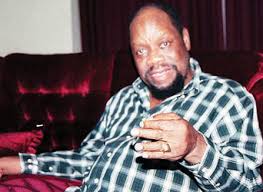
The Aburi Accord of January 1967 — negotiated in Ghana — was the last serious chance for a peaceful settlement, proposing a loose confederation that would protect Igbo safety. The federal government repudiated it within weeks. On 30 May 1967, Ojukwu declared Biafran independence before the Eastern Consultative Assembly to a standing ovation.
The War: Thirty Months
The war lasted thirty months — July 1967 to January 1970. Biafra made significant early advances, including the Midwest incursion that brought forces within striking distance of Lagos. Federal forces recaptured Enugu in October 1967 and Onitsha in March 1968. The war settled into siege warfare as federal forces tightened encirclement of the Biafran heartland. The federal blockade — which prevented food, medicine, and relief supplies from reaching the civilian population — produced the famine of 1968–1970 that killed between 500,000 and 2 million people, the majority of them children under five.
The Famine and the Airlift
The Biafran famine was the first humanitarian crisis extensively documented by television journalism. Images of kwashiorkor-afflicted children reached living rooms across Europe and North America and produced the founding of Médecins Sans Frontières. The Joint Church Aid airlift — flying food and medicine into Biafra at night in defiance of the federal government — saved hundreds of thousands of lives. Biafran territory shrank to a fraction of its original size. Ojukwu fled on 10 January 1970. Philip Effiong announced surrender on 12 January 1970.
The Aftermath
Gowon's "No Victor, No Vanquished" formula was admirable as intent and false as description. The Abandoned Property policy appropriated Igbo homes and businesses; the twenty-pound bank limit wiped out family savings; federal reconstruction bypassed the devastated Igbo heartland. The "Igbo miracle" of rapid economic reconstruction through private enterprise and community self-help was real — but the structural conditions that caused the war remained unaddressed. The war ended. The argument did not.