
The pogroms of 1966 — the organised mass killings of Igbo people in northern Nigeria between May and October 1966 that killed between 30,000 and 100,000 people and drove approximately 1.3 million Igbo back to the East.
What Happened
Between May and October 1966, Igbo people living in northern Nigeria were subjected to organised mass violence that constitutes one of the worst episodes of ethnic killing in post-colonial African history. The violence occurred in two major waves. The first wave began in late May 1966, following the counter-coup announcement that General Ironsi had unified the civil service — a measure that northern politicians and the northern population had been persuaded would lead to Igbo domination of the federal government. Riots in Kano, Kaduna, and other northern cities killed several hundred Igbo. The second and far more deadly wave began on 29 September 1966 — a date still commemorated annually by Igbo communities worldwide — and continued through October. This wave was more organised, more widespread, and far more lethal.
The September-October killings were not spontaneous riots. They were organised. The pattern across different northern cities was too consistent to be spontaneous: at roughly the same time, in cities hundreds of miles apart, Igbo were identified, separated from non-Igbo, and killed. Lists of Igbo residents appear to have been compiled in advance. The Nigerian Army — in which Igbo soldiers served — was not deployed to protect civilians; in many cases, Igbo soldiers were themselves killed by their northern colleagues. The scale and coordination of the killings bear the characteristics of a planned operation rather than a spontaneous outbreak of ethnic violence.
The Numbers
The death toll from the 1966 pogroms has never been definitively established, and the Nigerian government has never conducted a formal inquiry that would establish the facts. Estimates range from 10,000 (the low estimate given by some Nigerian government sources) to 100,000 (the high estimate given by some Biafran sources and some international observers). The most frequently cited scholarly estimate is approximately 30,000 dead, but this figure is itself uncertain — the killings occurred across a vast area, record-keeping was disrupted, and many victims were never formally identified or recorded.
What is beyond dispute is the displacement. Approximately 1.3 million Igbo — some estimates run higher — fled northern Nigeria in the weeks and months following the September 1966 killings. They arrived in the Eastern Region carrying the physical and psychological scars of what they had witnessed and experienced. The arrival of this traumatised, impoverished, bereaved population in the East was one of the immediate triggers for the escalation of the constitutional crisis that would lead to Biafran independence.
The Political Context
The pogroms did not emerge from a vacuum. The January 1966 coup — which killed the Northern Premier Ahmadu Bello, the Federal Prime Minister Tafawa Balewa, and the Western Premier Akintola, but spared the Eastern leaders — was perceived in the North as an Igbo attempt to seize power. The counter-coup of July 1966 — which killed many Igbo officers and placed Yakubu Gowon in power — restored northern military dominance but did not resolve the underlying constitutional crisis. The announcement that General Ironsi would unify the civil service — removing the protection that federalism gave to northern domination of the northern civil service — was the immediate trigger for the May riots.
What the political context explains is the grievance; it does not excuse the violence. The killing of civilians, the systematic targeting of an ethnic group, the organised nature of the September-October killings — these cannot be justified by political grievance, however real. The 1966 pogroms are a crime against humanity by any standard of international law, and the fact that they have never been formally acknowledged as such by the Nigerian state — that no truth commission has been established, that no perpetrators have been prosecuted, that no formal reparations have been paid — is itself a fact about the Nigerian state's relationship with its Igbo citizens.
The Failure of Protection
One of the most important facts about the 1966 pogroms is that the Nigerian state failed to protect its citizens. The federal government had both the knowledge and the capacity to intervene — to deploy troops to protect Igbo civilians, to arrest perpetrators, to stop the killings. It did not do so. This failure of protection is not a matter of incapacity; it is a matter of political will. The Nigerian government — under Gowon, who came to power through the July counter-coup — chose not to protect the Igbo.
This failure had profound consequences. It demonstrated to the Igbo political leadership that they could not rely on the Nigerian state for protection. It made the case for a separate Igbo state — for Biafra — in the most visceral possible terms. If the Nigerian state would not protect Igbo lives in northern Nigeria, what guarantee was there that it would protect Igbo lives anywhere? The constitutional arguments for Biafra were many; the emotional and psychological foundation for Biafran independence was the 1966 pogroms.
Memory and Commemoration
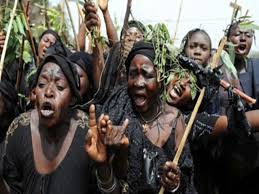
September 29 is observed annually by Igbo communities worldwide as a day of commemoration for the victims of the 1966 pogroms. The commemorations typically include church services, candlelight vigils, and public discussions of the historical record. In recent years, IPOB has made September 29 a major occasion for political mobilisation as well as historical commemoration.
The memory of the pogroms remains intensely alive in Igbo consciousness — in family histories, in oral tradition, in the testimony of survivors, and in the political consciousness of the Igbo self-determination movement. The absence of formal Nigerian state acknowledgement of what occurred — no apology, no truth commission, no prosecution, no reparations — keeps the wound open. Until the Nigerian state acknowledges what was done to Igbo people in 1966, the 1966 pogroms will remain an open historical and political wound rather than a closed historical chapter.