
The kola nut — oji — the most sacred object in Igbo ritual life, and the key to understanding Igbo hospitality, cosmology, and social hierarchy.
Oji Igbo: The Sacred Kola
The kola nut is not a food in Igbo culture. It is a sacrament — the object through which human beings communicate with their ancestors and with the divine, and through which the moral seriousness of a gathering is established. No occasion of significance — no welcoming of a visitor, no marriage negotiation, no title-taking ceremony, no prayer for the community — begins without kola. The absence of kola is not merely an oversight; it is a statement that the occasion does not merit the full weight of ancestral witness.
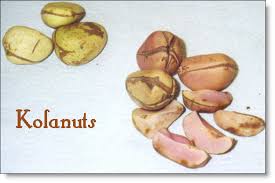
The most prestigious form of kola nut in Igbo culture is the four-lobed oji igbo (Igbo kola, Cola nitida in its four-lobed variety). A four-lobed kola is considered a gift of particular honour and is associated with the gods and the ancestors. Two-lobed kola is acceptable for ordinary social occasions. When a four-lobed kola is produced at a gathering, its appearance is itself an event — it will be noted and commented upon.
The Presentation Ritual
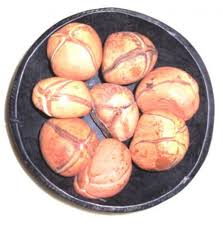
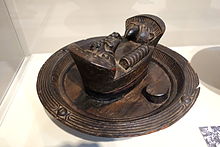
The kola nut presentation ritual follows a precise sequence that encodes the social structure of the occasion. The kola is brought out on a plate or in a carved wooden container. It is presented first to the most senior person present — or to the person the host wishes to honour — who holds it while prayers are said. The prayer (igo oji) addresses the ancestors by name, invokes the blessings being sought, and connects the present gathering to the community's ancestral foundation.
After prayer, the kola is broken — always by hand, never with a knife, because a knife is a weapon and kola is sacred. The lobes are distributed to those present in order of seniority, with specific protocols determining who receives which lobe and in what order. The entire ritual may take between five minutes and half an hour depending on the formality of the occasion.
The Prayer: Theology in Practice
The kola nut prayer (igo oji) is the most important ritual speech act in Igbo culture. The most important formula: Onye wetara oji wetara ndụ — "He who brings kola brings life." This statement encodes the theological claim of the entire kola tradition: that the kola nut is not merely a seed but a vehicle of life itself — the life that the ancestors continue to provide to the living community through their ongoing presence and intervention.
Social Hierarchy and the Kola Protocol
The kola nut ritual is one of the primary mechanisms through which Igbo social hierarchy is enacted and reinforced. Every aspect of the ritual encodes hierarchy: who presents the kola, who receives it first, who prays over it, who breaks it, and who receives which lobe. A gathering at which kola protocol is observed correctly is a gathering in which the social order has been publicly acknowledged and affirmed.
Kola in the Contemporary World
The kola nut tradition has survived urbanisation, Christian conversion, and diaspora in remarkably robust forms. Igbo Christians who do not participate in other traditional religious practices typically participate in kola presentations at family gatherings. In the diaspora, kola is a marker of Igbo identity at community gatherings — kola nuts are imported to diaspora communities in the UK, USA, and elsewhere, and their appearance at a gathering signals that the occasion is being treated with the full weight of Igbo tradition.