The landscape of Igbo history — from the 9th-century bronzes of Igbo-Ukwu to the contemporary self-determination movement, the major periods and turning points.
The Long View
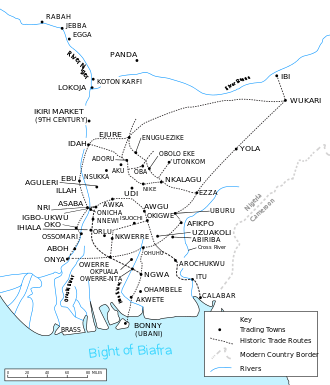
Igbo history is not a history of a people without history. It is a history that European colonialism chose not to write — and that the Igbo are now writing for themselves. The 9th-century bronzes of Igbo-Ukwu demonstrate sophisticated metallurgical achievement and long-distance trade connections a thousand years before any European arrived on the West African coast. The Nri Kingdom exercised ritual authority across much of Igboland from at least the 10th century. The Aro trading network connected the forest zone to the broader West African commercial world. These are not the institutions of a people without history; they are the institutions of a people whose history was systematically denied.

The Major Periods
The Precolonial Era (to c.1885) — Igboland governed through distributed village republics, the Nri ritual kingdom, and the Aro trading network. The Atlantic slave trade (c.1650–1850) removed approximately 1.6 million people from the Bight of Biafra and profoundly disrupted Igbo social structures.
The Colonial Period (1885–1960) — British conquest through the Aro Expedition (1901–1902) and subsequent "pacification" campaigns; the warrant chief system; the Women's War of 1929; missionary Christianity and Western education; the emergence of Igbo nationalism.
Independence and War (1960–1970) — Nigerian independence (1960); the January and July coups of 1966; the pogroms that killed between 30,000 and 100,000 Igbo; Biafran independence (May 1967); thirty months of war and famine; surrender (January 1970).
The Post-War Era (1970–present) — the "Igbo miracle" of economic reconstruction; oil boom and structural adjustment; military dictatorship and democratic transition; the emergence of IPOB and the contemporary self-determination movement.
What Makes Igbo History Distinctive
Three features of Igbo history stand out in comparative perspective. First, the radical political decentralisation: while neighbouring peoples developed centralised kingdoms (Benin, the Sokoto Caliphate), the Igbo maintained distributed, consensual governance through village assemblies and title societies — a form of political organisation that colonial administrators could not comprehend and that the Igbo have consistently defended against attempts to impose centralised authority. Second, the extraordinary educational achievement: the Igbo embrace of mission education in the colonial period, and the subsequent investment in children's education that has made the Igbo one of the most highly educated populations in Africa. Third, the persistent resistance: from the Ekumeku guerrillas to the Women's War to Biafra to IPOB, the Igbo have consistently refused to accept domination without organised resistance.